An application that keeps track of
your daily mediational needs.
Designed by
Naina Mohanty
More than A Pill Reminder App
App is not just a pill reminder, Our social responsibility is important to us. So, I started to design an unique experience to help you be calm and accurate.
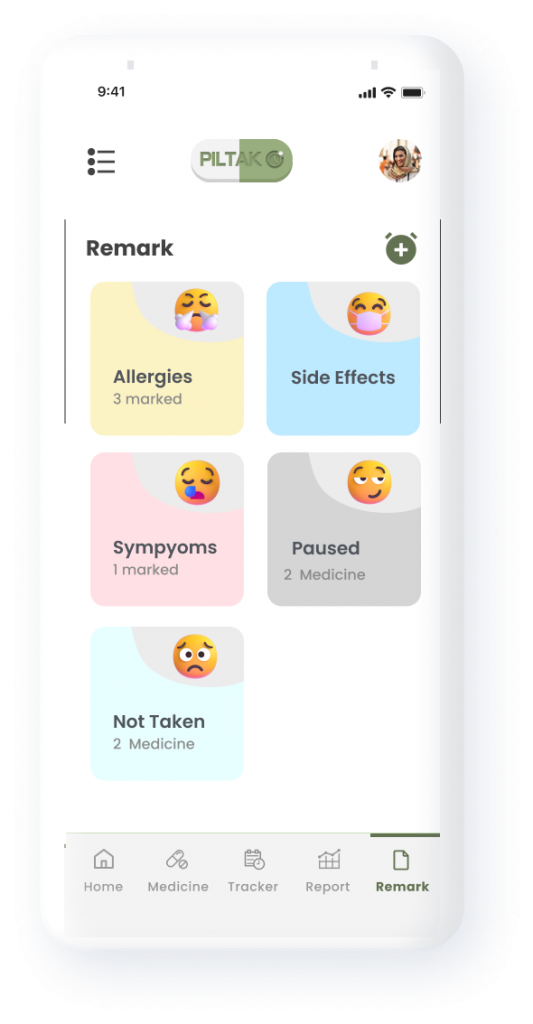
PILTAKO is a reminder-type product that is a conceptual interactive prototype that helps medicine tackers adhere to their medication schedule, keep track of their mood and side effects.
Most of the people are on medications. Life has become so much busier that people often forget to take their medicines on time or are distracted enough to not care about it.
In order to make this application efficient we had to understand what are
the cause of medical non- adherence and what features can we provide for users to improve their
circumstances.
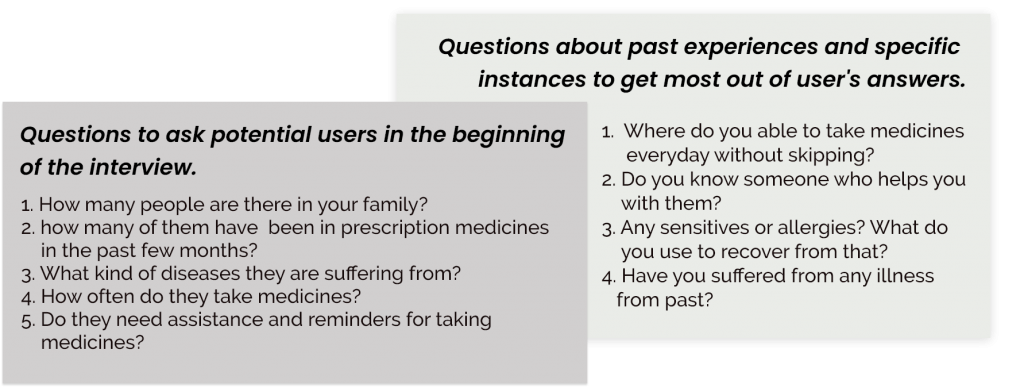
For this, we created a set of questionnaire which we used to conduct interviews of our relatives
and
closed ones to understand what problems they face related to medicine adherence.
Mona das is a student of computer science who needs an assistive app to set lists of medication reminder for herself because she frequently misses their medicines due to negligence causing severe illness.
Ritesh Sharma is retired engineer and grand father who needs something to remind him in taking medicines of diabetes in time because he forgets taking medicines in time when playing with grand daughters and reading books which causes his pain to increase.
Competitive audit
To empathise with the users, we also create empathy maps and user journey map to dig deeper into each stage that our personas go through while browsing the artwork.
> Notify pill take 5 min before the scheduled time.
Mona adds that to her calendar and feels so supported.
Ideation
I have come up with quick eight ideas to address gaps identified in the competitive audit.
My focus was specifically on the process of adding medicine name and setting reminder time.
Starting
the design
Digital wireframes
Low-fidelity prototype
Usability studies
Digital wireframes
As the goal is to help people to get medicine on time, I focused on the process of adding reminder thoroughly so that users can find familiar and easily accessible options to add reminder.
Low-fidelity prototype
I have sketched many screens with different layouts, structures, and elements and from that, I had to choose the best fit screens that will be seen great in digital screens. I have come up with the best solutions, that will solve the pain points of users.
View PILTAKO, more than a pill reminder app (Low-fidelity prototype) https://www.figma.com/proto/zJkoxhEmgwmQyFj7QUY95r/PILTAKO?node-id=138%3A6272&scaling=scale-down&page-id=9%3A3&starting-point-node-id=138%3A6263
In this phase of usability study, the goal was to made add reminder medicine process more familiar by updating the " add reminder" icon with bigger size compare to other icons.
In this phase user can add, edit or can check history of appointments with just a single click button, here no need of going back to user menu and check appointment.
The prototyping was really complicated, and I have come up with easy navigations. These will give the user a best app experience.
View PILTAKO, more than a pill reminder app (High-fidelity prototype)
https://www.figma.com/proto/zJkoxhEmgwmQyFj7QUY95r/PILTAKO?node-id=89%3A8614&scaling=scale-down&page-id=9%3A2&starting-point-node-id=89%3A8614
Accessibility
Familiar and standard labels added in the buttons and cards that can be read by screen readers
Icons were used for easy navigation
Color contrasts were checked by cooler which will benefit users with visual views
Responsive Design
Information architecture
Responsive design
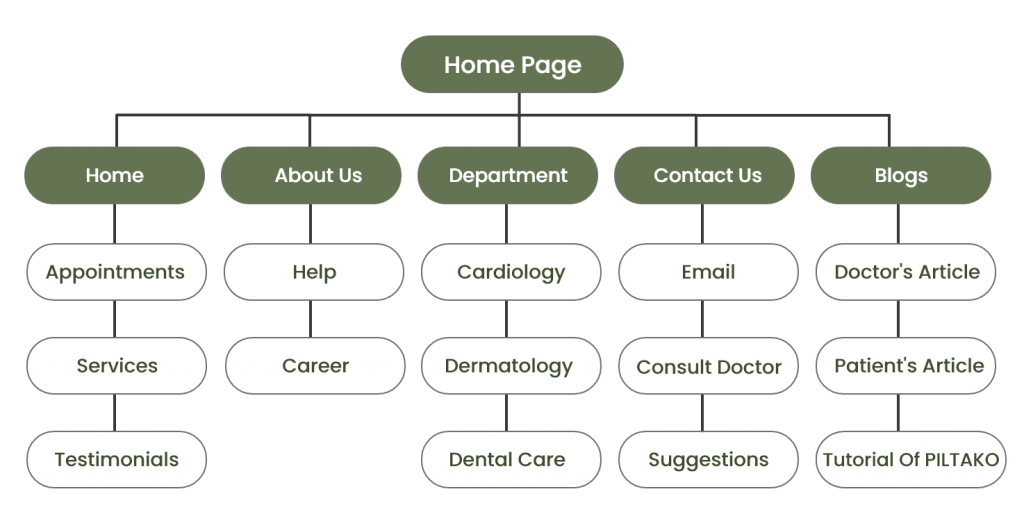
Sitemap
After completing the app design, I started work on designing the responsive website. my idea was to set tutorial focused website for PILTAKO target users. Following that, I used the sitemap to guide the organization structure of each screen's design to ensure a cohesive and consistent experience across devices.
Responsive designs
To proceed designing for responsive devices, First framed up wireframes digitally which enabled me to ideate productively and had a chance to think of the responsiveness with proper concentration.
Competitive audit
To empathise with the users, we also create empathy maps and user journey map to dig deeper into each stage that our personas go through while browsing the artwork.
Designing for social goods was one of my significant topics of UX research which helped my thought process to develop based on real-life problems and I have benefited in empathizing with users by digging deep into the core problem and thus come up with solutions that were feasible, usable and viable.
Next steps
Designing the same concept in a watch. So that users can easily get reminders of taking pills, notifications, and many more.
Add medicine details to the app where users can get to know about a particular medicine.
Provide incentives and rewards to users for successfully completing prescribed medicines on time.